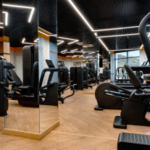

1. Hotels: Where Luxury Meets Wellness
For hotels, the gym is often an important part of the guest experience. A thoughtfully designed fitness space can elevate your property’s appeal and drive higher customer satisfaction.
- Unique Fitness Needs: Hotel guests look for an upscale experience. They expect modern, versatile equipment, user friendly technology, and a welcoming atmosphere that matches the hotel’s brand image.
- Design Tips:
- Focus on aesthetics with sleek equipment, elegant lighting, and premium flooring.
- Based on space available, include space-saving dual or multifunctional machines to accommodate a range of workout preferences.
- Choose equipment with integrated technology such as touchscreen consoles, TV display, or app connectivity to impress your tech-savvy guests and give your gym an upscale feel.
- Standout Feature: A dedicated wellness zone for Yoga, Pilates or Meditation with tranquil vibes and a view can make a lasting impression on guests.
2. Corporates: Building a Culture of Wellness
A corporate gym isn’t just about fitness; it’s about fostering a culture of health and productivity among your employees. With rising awareness of the link between wellness and work performance, corporates are increasingly investing in fitness spaces.
- Unique Fitness Needs: Employees need a functional gym that supports short, effective workouts during breaks or after work hours. It also serves as a place to hangout with coworkers.
- Design Tips:
- Create compact, flexible spaces with high-efficiency equipment like treadmills, rowers, and strength training machines.
- Provide open areas for group fitness activities, such as Zumba or circuit training, to encourage team-building.
- Add locker rooms and shower facilities to support a hassle-free transition between workouts and work.
- Standout Feature: Incorporating smart technology, fitness tracking, ensures convenience and engagement.
3. Residential Projects: Fitness for the Community
A gym in a residential project is a lifestyle feature that enhances community living. Residents of all ages and fitness levels will want a gym that caters to their needs.
- Unique Fitness Needs: Residential gyms while serving diverse age groups and fitness motivations, must cater to senior citizens and home makers who spend more time around the residential society.
- Design Tips:
- Offer a balanced mix of cardio equipment, free weights, and resistance machines for variety.
- Designate zones for group classes, cardio, strength and floor exercises and stretches.
- Incorporate natural lighting, or outdoor workout areas to blend fitness with relaxation.
- Standout Feature: Include family-friendly options like a kids’ activity corner to appeal to young families and engage children when parents exercise.
Optimizing Space: Making Every Square Foot Count
Whether you have the luxury of large sprawling area or a compact room, smart space optimisation is essential to a successful gym design:
- Based on the number and type of users, use dual or multifunctional machines to save space while offering a variety of exercises.
- Plan clear zones for different activities (e.g., cardio, strength, stretching) to maintain a seamless flow.
- Include mirrors strategically to make the gym appear more spacious while allowing users to appreciate their workout experience.
Choosing the Right Equipment: Quality Over Quantity
The choice of equipment defines the functionality and appeal of the gym.
- Invest in durable, low-maintenance equipment for long-term value.
- Prioritise functional design and safety for a wide range of users.
- Choose locally made or imported equipment for a cost-effective yet premium setup.
To truly stand out, go beyond the basics:
- Personalisation: Customise the space with your property branding elements that resonate with your audience, like logos or color themes.
- Technology Integration: Add smart features such as touchscreen displays, music systems, or virtual fitness programs based on gym user and budget.
- Ambience: Use natural light where available and color schemes to create an inspiring environment.
Conclusion
Designing the perfect gym is both an art and a science. By understanding the unique needs of hotels, corporates, and residential projects, and implementing customised solutions, you can create fitness spaces that inspire, engage, and deliver exceptional value.
Whether you’re looking to build a luxury gym for your hotel guests, a functional wellness hub for employees, or a community-centric fitness area for residents, expert consultation and thoughtful planning are most important. Let’s create spaces where fitness meets functionality and style!